

Why Less is More in Luxury British Men's Fashion in 2026
Why less is more in luxury British men's fashion is no longer a fringe opinion held by a handful of traditionalists — it is the defining shift of 2026, with search interest for "quiet luxury" and "stealth wealth" menswear surging by approximately 900% in the current fashion cycle. The modern British man is not buying more clothing; he is buying better clothing, and the distinction matters enormously for how he dresses, spends, and presents himself.
Key Takeaways
|
Question |
Answer |
|---|---|
|
What does "less is more" mean in British men's fashion? |
It means owning fewer, higher-quality garments made to last for decades rather than filling a wardrobe with disposable pieces worn only a handful of times. |
|
How many pieces should a luxury capsule wardrobe contain in 2026? |
The 2026 benchmark is 30 to 35 carefully selected pieces that cover every life occasion, reducing annual clothing spend by up to 30%. |
|
Is a £770 British-made jacket worth the price? |
When calculated by cost-per-wear over a seven-year lifespan, a premium Made in England jacket costs a fraction of a penny per wear, making it significantly cheaper than fast fashion alternatives. |
|
What materials define minimal luxury in British menswear? |
100% British Melton wool and 100% Cupro lining are the benchmark materials for garments built for decades, offering natural wind resistance and superior moisture management without synthetic coatings. |
|
Why is Made in England significant for luxury minimalism? |
With 165 British crafts on the Red List of endangered skills, genuinely Made in England garments preserve heritage manufacturing methods that produce superior construction quality unavailable from offshore production. |
|
What is the best jacket for a minimal luxury wardrobe? |
The Guush Harrington Jacket is designed precisely for this purpose: a clean, minimal silhouette in 100% British Melton wool, made entirely in England, priced at £770. |
|
How does 80% of a wardrobe go unworn? |
Research consistently shows that 80% of the average wardrobe is never worn regularly, with fast fashion items typically discarded after only 7 to 10 wears, confirming that more clothing does not produce more utility. |
The Philosophy Behind "Less is More" in Luxury British Men's Fashion
The principle of why less is more in luxury British men's fashion is rooted in something far older than modern minimalism trends. British tailoring has always valued restraint, precision, and longevity over decoration, excess, and novelty.
The problem with contemporary dressing is that the fashion industry has conditioned men to buy constantly and discard quickly. Research confirms that 80% of the average wardrobe is never worn regularly, and fast fashion items are typically discarded after only 7 to 10 wears — a cycle of waste that produces neither style nor value.
We approach this differently. Our position is that dressing with intention — selecting each garment for a specific, lasting purpose — produces a wardrobe that actually functions, rather than a wardrobe that merely exists. No excess. No impulse buys collecting dust.
Why Less is More: The 30 to 35 Piece Capsule Wardrobe Standard for 2026
The 2026 benchmark for a well-dressed man is not a wardrobe packed with options. It is a wardrobe of precisely 30 to 35 pieces, each selected to cover every life occasion from formal work environments to casual weekends to transitional outdoor wear.
This is not an arbitrary number. Men who operate with a 30 to 35 piece wardrobe report reducing their annual clothing spend by up to 30%, because each purchase replaces a category of need rather than adding to a pile of redundancy.
The logic is straightforward. When every piece in your wardrobe earns its place, you dress faster, dress better, and spend less over time. The difficulty lies in having the discipline to select pieces that genuinely justify their position, which is where material quality and honest construction become non-negotiable.
"Built for decades, not seasons. A wardrobe of 30 to 35 considered pieces outperforms a wardrobe of 200 impulse purchases in every measurable way."
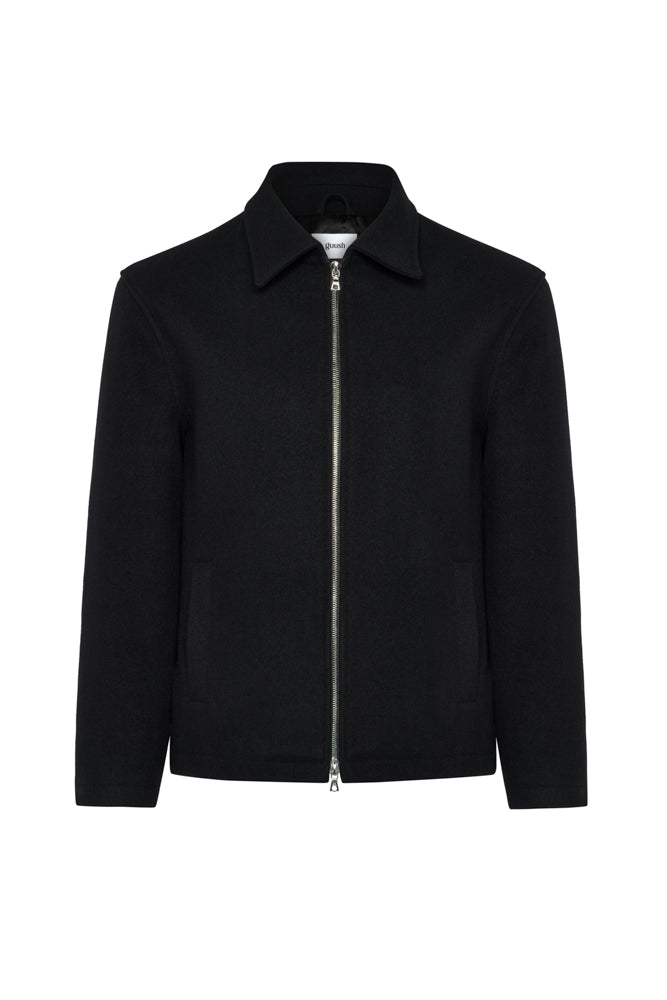
This is why our collection focuses on pieces that genuinely cover multiple contexts. A Harrington jacket in 100% British Melton wool serves equally well over a shirt for a working lunch, worn open over a knit for a weekend walk, or layered under an overcoat in colder months. One piece. Multiple functions. That is what the capsule wardrobe philosophy demands.
A concise visual guide showing the 3 elements of minimal luxury in British men's fashion. Focus on quality, timeless design, and discreet branding shaping refined style.
How British Materials Define What "More" Actually Means
When we say "less is more" in luxury British men's fashion, "more" refers to material performance, construction integrity, and lifespan — not to visual complexity or branded decoration. The materials chosen for a garment determine everything about how long it lasts and how well it performs.
Melton wool is the clearest example. It is a tightly woven, heavyweight fabric that undergoes a process called fulling, which compresses the fibres to create a naturally dense structure. The result is a cloth that is windproof and water-resistant without synthetic coatings or chemical treatments — properties that degrade over time in treated fabrics but remain permanent in properly woven Melton.
We use 100% British Melton wool sourced through direct relationships with British mills. This allows us to verify the wool's origin in person rather than relying on third-party audits, which is the only honest way to make a claim about provenance.
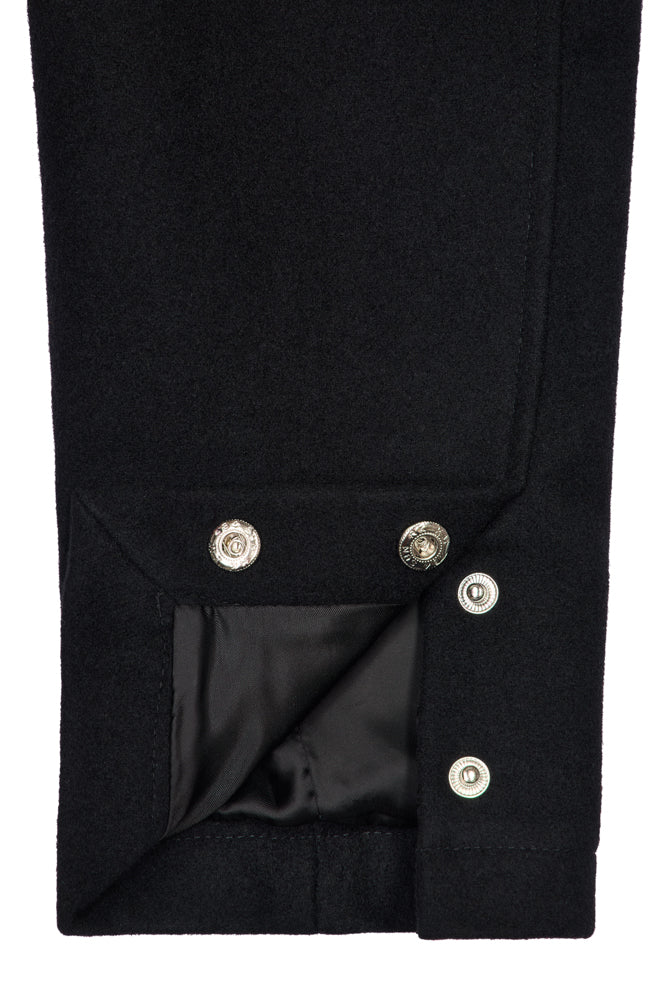
The lining matters equally. Polyester linings trap heat and moisture, making garments uncomfortable for extended wear and reducing the frequency with which they are actually used. Cupro, derived from cotton linter waste, allows moisture to evaporate naturally, maintains a cool feel against the skin, and extends the functional life of the garment significantly. Every piece in our jacket collection is lined in 100% Cupro for precisely this reason.
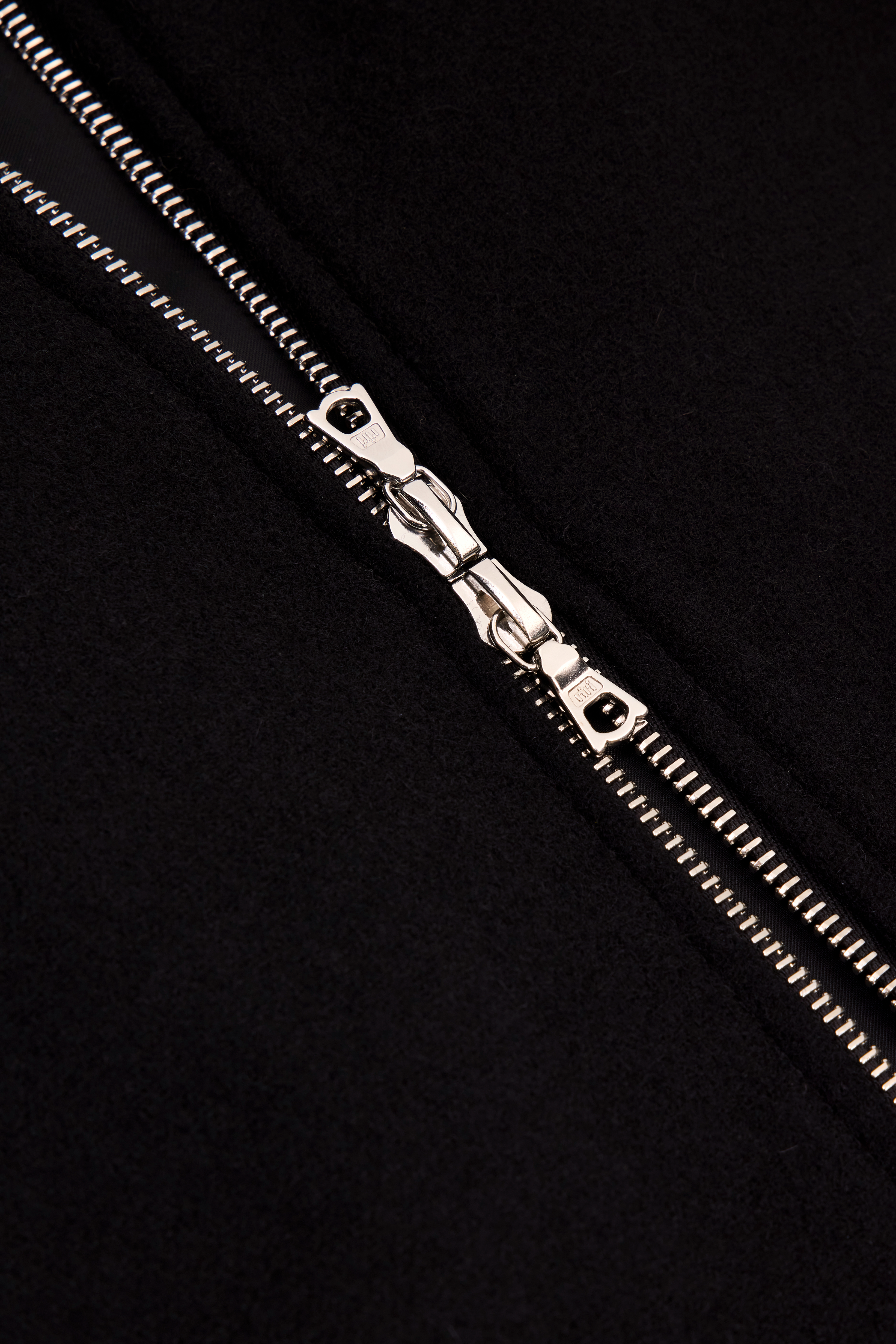
Hardware is the final material variable that separates a considered garment from a careless one. We specify Riri M4 heritage-grade zips, not because of branding, but because their mechanical tolerance and material quality outlast the alternatives by years. Clean construction is not invisible — it is visible in how a garment functions after a thousand uses.
Did You Know?
A pre-owned luxury outfit is 33% more affordable than a new fast-fashion outfit when calculated by cost-per-wear — confirming that investing in one quality piece costs less over its lifetime than replacing cheap alternatives repeatedly.
Source: retailtimes.co.uk
Why Less is More in Luxury British Men's Fashion: The Cost-Per-Wear Argument
The strongest case for why less is more in luxury British men's fashion is not aesthetic — it is mathematical. The cost-per-wear calculation exposes the real economics of clothing in a way that the retail price alone cannot.
Consider a fast fashion jacket purchased for £80. Worn 8 times before it deteriorates structurally or falls out of trend, its cost-per-wear is £10. A quality Made in England garment priced at £770, worn regularly for seven or more years, delivers a cost-per-wear measured in pennies. The expensive item is, by any rational measure, the cheaper choice.
This is why 47% of UK luxury buyers now view their fashion purchases as a financial investment rather than a discretionary expense. The shift in mindset from "how much does this cost today" to "how much does this cost per use over its lifetime" is the single most important change in how British men are approaching their wardrobes in 2026.
-
Fast fashion jacket at £80: Worn 8 times. Cost-per-wear: £10.00
-
Quality Made in England jacket at £770: Worn 3 times per week for 7 years (approx. 1,092 wears). Cost-per-wear: under £1.00
-
Difference over a 7-year period: The premium garment saves money while performing significantly better throughout
The cycle ends here. When men stop thinking in terms of purchase price and start thinking in terms of value over time, the entire logic of fast fashion collapses. One well-made piece owned for seven years is not just aesthetically superior — it is economically superior.
The Harrington Jacket: A Case Study in Why Less is More
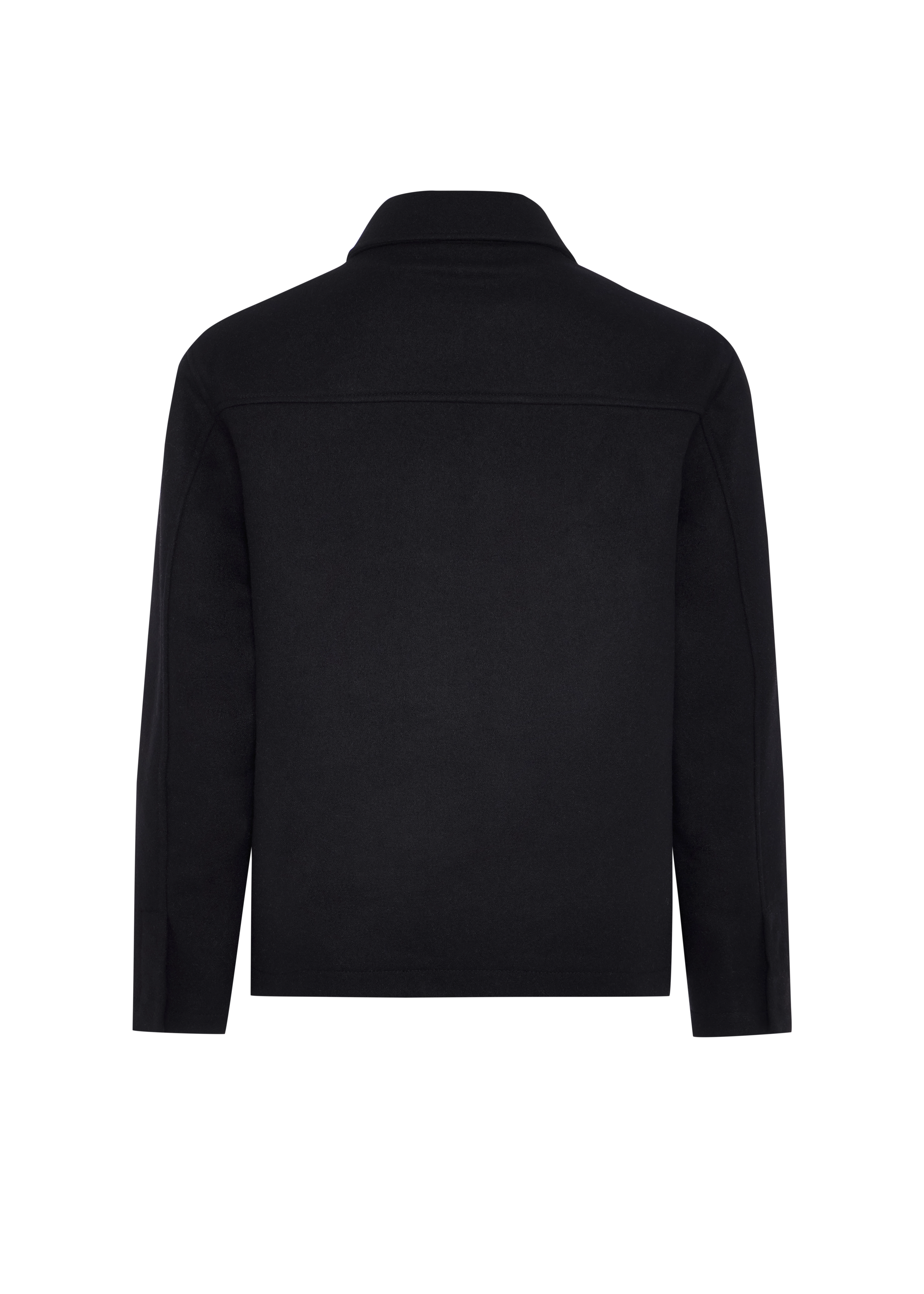
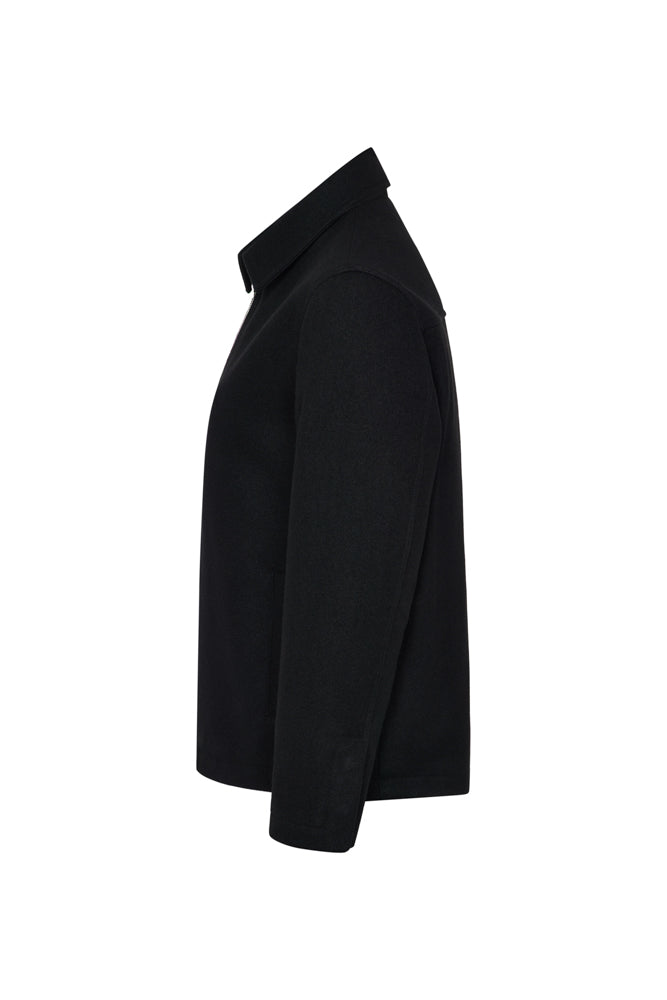
No single garment better illustrates why less is more in luxury British men's fashion than the Harrington jacket executed in the correct materials and construction. The silhouette is disciplined: a straight cut, clean lines, and no decorative excess. Everything present serves a purpose.
Our Harrington Jacket is produced entirely in England from 100% British Melton wool, priced at £770, and made to order. Production only begins once a garment is purchased, which eliminates waste at the manufacturing stage and ensures that every jacket that exists was made because someone chose it with deliberate intention.
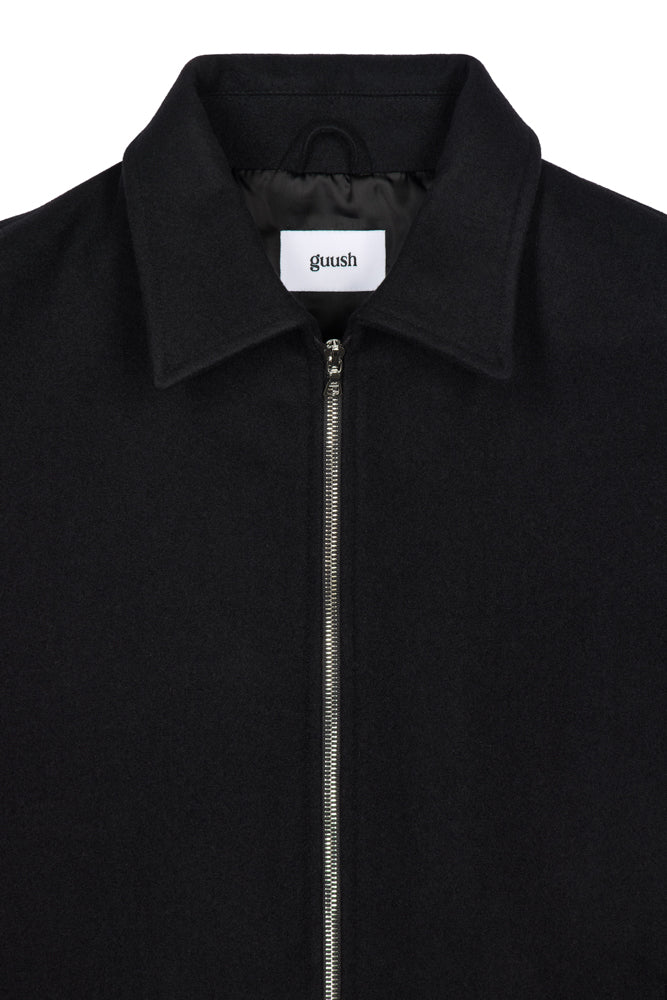
The functional specification is precise. Four zippered welt pockets provide secure storage without disrupting the jacket's silhouette. A two-way Riri M4 zip allows the garment to open from the base as well as the top, which is a practical feature for driving or seated wear that cheaper zips cannot reliably deliver. The 100% Cupro lining ensures the jacket feels as considered to wear as it looks.
This is what Made in England clothing looks like when the label actually means something. Not "designed in Britain, assembled elsewhere," but conceived, cut, constructed, and finished within England by craftspeople applying skills that are, by the admission of industry bodies, at serious risk of disappearing entirely.
"With 165 British crafts on the Red List of endangered skills, choosing a genuinely Made in England garment is not a premium for the sake of prestige — it is a decision to support a production ecosystem that, once lost, cannot be recovered."
Why Less is More Means Choosing Craftsmanship Over Brand Visibility
The most significant shift in luxury British men's fashion in 2026 is the move away from visible branding as the primary signal of quality. Where previous generations equated prominent logos with prestige, the current generation of discerning British men reads craftsmanship as the true indicator of value.
This is confirmed by the data: 59% of UK luxury consumers now identify craftsmanship and materials as the primary motivator for their purchases, placing it ahead of brand prestige. This is not a minor shift — it represents a fundamental reordering of what "luxury" means to the men who buy it.
The implication for how men should select their wardrobes is direct. A jacket without a visible logo but constructed from verifiable British Melton wool, lined in Cupro, and fastened with heritage-grade hardware carries more honest luxury than a logo-heavy alternative assembled from undisclosed materials in an undisclosed location.
Quality over everything. This is not a slogan — it is a purchasing framework. When you apply it rigorously to a 30 to 35 piece wardrobe, the results are a collection of garments that perform reliably, age well, and never need to be replaced on a seasonal basis. Browse the new arrivals with this framework in mind and the selection process becomes significantly more straightforward.
Did You Know?
59% of UK luxury consumers identify "craftsmanship and materials" as the primary motivator for their purchases — placing it ahead of brand prestige for the first time in recorded consumer research.
Source: fashionnetwork.com
Building a Minimal Luxury Wardrobe: Practical Principles for 2026
Understanding why less is more in luxury British men's fashion is the first step. Building a wardrobe that actually embodies this principle requires a practical framework that most men have never been given.
The following principles form the foundation of a wardrobe built for decades, not seasons.
-
Audit before you buy. If 80% of your wardrobe is unworn, adding more clothing solves nothing. The first action is removal, not acquisition.
-
Replace categories, not items. When a worn garment needs replacing, select the best version of that category available — not the most affordable, and not the most fashionable, but the most durable and versatile.
-
Demand material transparency. Any brand unwilling to name the exact fabric composition, lining material, and hardware specification is not operating at the standard required for minimal luxury investment.
-
Prioritise versatility over occasion-specificity. In 2026, 89% of UK luxury shoppers cite versatility as their primary purchase driver. A piece that works across multiple contexts earns its place; a piece that works only one way does not.
-
Think in cost-per-wear from the outset. Before any purchase, divide the price by the realistic number of wears over five to seven years. If the result is under £1.00 per wear, the economics justify the investment.
-
Verify provenance, not just labelling. "Made in England" should mean the entire garment was produced in England — not finished locally after offshore construction. Ask the question directly and require a specific answer.
These six principles, applied consistently to the 30 to 35 piece capsule wardrobe model, produce a wardrobe that costs less annually, performs better daily, and requires significantly less maintenance and replacement over time.
Why Less is More in British Men's Fashion Also Means Less Environmental Impact
The environmental case for the "less is more" approach in luxury British men's fashion is equally compelling. Extending the life of a garment by just nine months reduces its carbon, waste, and water footprint by 20% to 30% — which means a single good purchasing decision compounds into significant environmental benefit over time.
The made-to-order production model eliminates overstock entirely. When a garment is only produced once it has been purchased, there is no excess inventory, no end-of-season discounting, and no surplus sent to landfill. This is the production model we apply to our Harrington Jacket, and it is the honest answer to the waste problem that fast fashion has normalised.
Additionally, natural fibres like Melton wool biodegrade at end of life in a way that synthetic alternatives do not. A jacket lined in Cupro rather than polyester eliminates microplastic shedding during washing, which is a direct reduction in water contamination at the point of garment care. These are not marketing claims — they are material properties that can be independently verified.
For questions about specific garment specifications or our production process, our team responds within 24 to 48 hours via our contact page, and all made-to-order orders can be tracked through our dedicated order tracking portal.
What Minimal Luxury Looks Like in Practice: The Guush Standard
We recognise that principles without examples are abstract. The practical standard we hold ourselves to — and which any brand claiming minimal luxury in British men's fashion should be held to — is specific and verifiable.
Every garment we produce must meet the following criteria before it earns a place in our collection.
|
Standard |
Requirement |
Why It Matters |
|---|---|---|
|
Outer Material |
100% British Melton wool, fulled |
Naturally windproof without synthetic coatings; lasts decades with correct care |
|
Lining |
100% Cupro |
Moisture-wicking, comfortable, no microplastic shedding; superior to polyester |
|
Hardware |
Riri M4 heritage-grade zips |
Mechanical tolerance built for years of daily use; will not fail prematurely |
|
Production |
Entirely Made in England, made to order |
No excess inventory; supports endangered British craft skills; verifiable provenance |
|
Silhouette |
Clean, minimal, straight-cut construction |
Timeless form that does not date seasonally; works across multiple dress occasions |
|
Supply Chain |
Direct relationships with British mills |
Origin verified in person; not dependent on third-party audits or offshore supply chains |
This is what the "less is more" standard looks like when applied with rigour. View our complete collection to see how this standard is maintained across every piece we offer.
Conclusion: Why Less is More in Luxury British Men's Fashion Remains the Most Rational Approach
The argument for why less is more in luxury British men's fashion in 2026 is not sentimental or fashionable — it is rational, economic, and evidenced. A wardrobe of 30 to 35 considered pieces, each made from verifiable British materials, constructed in England, and selected for multi-context versatility, costs less annually, performs better, lasts longer, and produces significantly less environmental harm than the alternative.
The data in 2026 is unambiguous: British men are moving toward quality over volume, craftsmanship over branding, and cost-per-wear logic over retail price impulse. This is not a trend — it is a correction, and it is the philosophy our entire production model is built upon.
Quality over everything. Built for decades, not seasons. That is the standard worth holding, and it is the only standard that genuinely justifies the word luxury in British men's fashion.

Written by Zakeria Ibrahim


Leave a comment
This site is protected by hCaptcha and the hCaptcha Privacy Policy and Terms of Service apply.